
THE SEVEN CODEX
Seven principles that frame his thinking, his work, and his purpose.
I. THE ARCHITECT OF MEANING
He is not defined by a single role. Across industry, academia, and intellectual life, his work consistently converges around one deeper function — constructing frameworks of meaning. His thinking is spatial, associative, and systemic. He does not build isolated ideas. He builds ecosystems.
II. THE ARCHITECTURE OF LIFE
Architecture, for him, is no longer confined to buildings or profession. It has expanded into a philosophical lens — a way of reading structure, meaning, memory, identity, and human existence. Every system, every relationship, every decision carries architectural logic. His thinking moves across three inseparable dimensions: philosophy as intent, academic inquiry as process, and practice as outcome.
III. THE GROUNDING
Behind every work and every intellectual pursuit stands one unwavering anchor — family, faith, and the responsibilities of a grounded life. All explorations — however far into technology or civilization — ultimately return here. To God. To family. To humility. To gratitude.
IV. THE WRITING
Writing, for him, is sacred in a civilizational sense. It preserves humanity across time. His writing blends academic discourse, philosophy, memoir, humor, spirituality, and architectural thinking into a multilayered voice — where casual readers find story, students find frameworks, and philosophers find meaning. He writes not for spectacle, but as contribution to human reflection.
V. EDUCATION & CIVILIZATION
As an educator and active contributor to professional architectural education, he teaches not to complete syllabi, but to awaken reflection. At the civilizational level, his recurring concern remains constant: how do human beings remain human while living beside increasingly intelligent creations? This question underlies much of his current writing and research.
VI. THE COGNITIVE ECOSYSTEM
He has pioneered a personal framework for structured reflective thinking through multiple cognitive voices and perspectives — engaging with emerging AI not as a mere instrument, but as a conversational companion in an evolving intellectual ecosystem. This framework supports his writing, deliberation, and synthesis across long-form projects and philosophical inquiry.
VII. THE PURPOSE
Everything — architecture, technology, civilization, writing, memory, and creativity — must eventually return toward God. One distinction remains central: human beings create from something. The Ultimate Creator creates from nothing. The work exists for one purpose: to contribute meaningfully to human reflection, to leave traces of thought for future generations, and to remain sincerely, humbly human throughout.
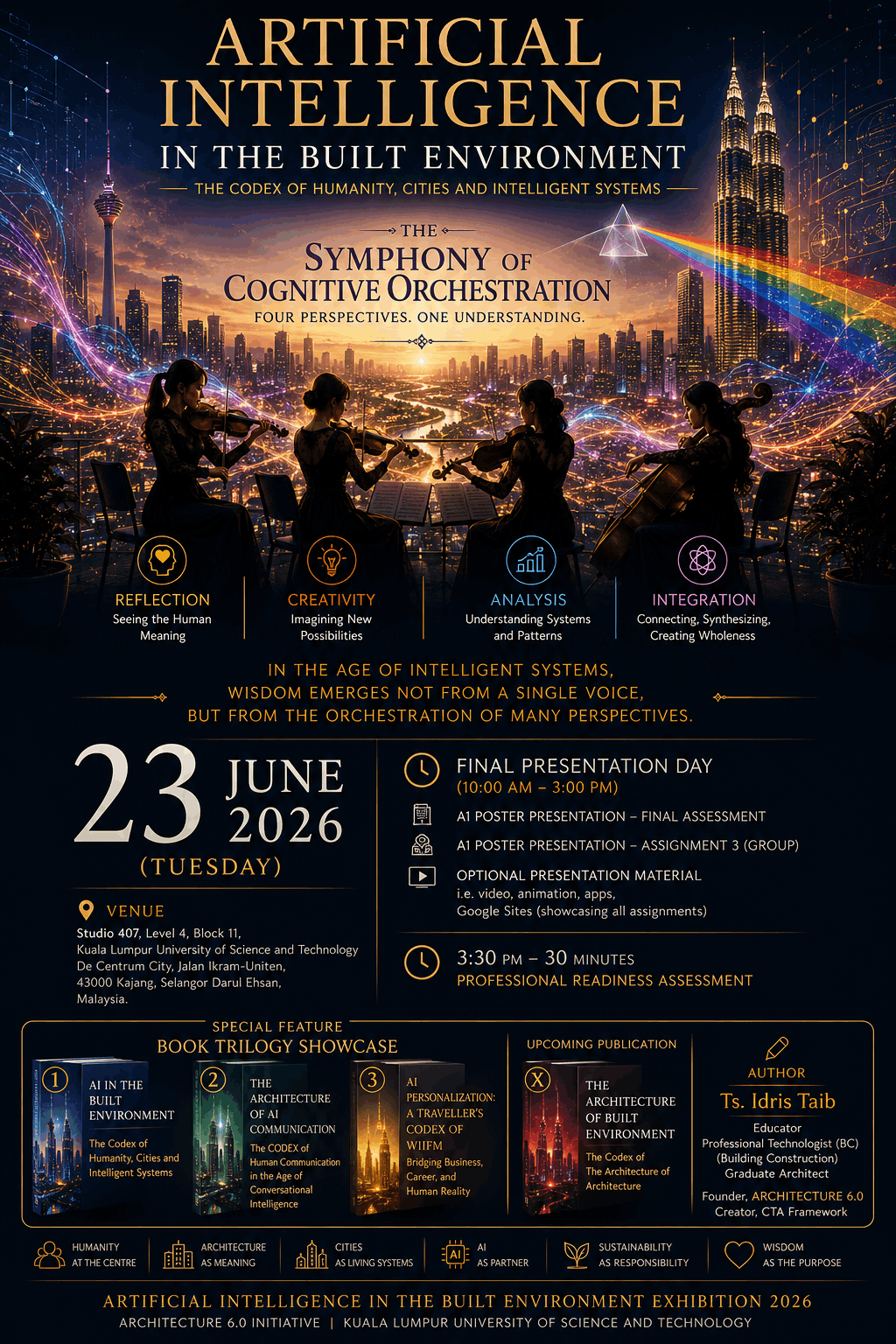
Ts. Idris Taib's philosophy on THE ARCHITECTURE OF LIFE draws from his diverse background in both industry and academia.
With degrees in Business Administration, Architecture, and Housing, Building & Planning, and extensive experience in property development, architectural consulting, project management, and education, he believes that just as architecture shapes the built environment, our lives are similarly shaped by the choices we make and the spaces we create.
For Idris, the architecture of life is a holistic approach that blends sustainability, cultural heritage, and innovation. It is about thoughtfully designing systems—whether in the physical environment or within our personal and professional lives—that foster resilience, well-being, and meaningful connections.
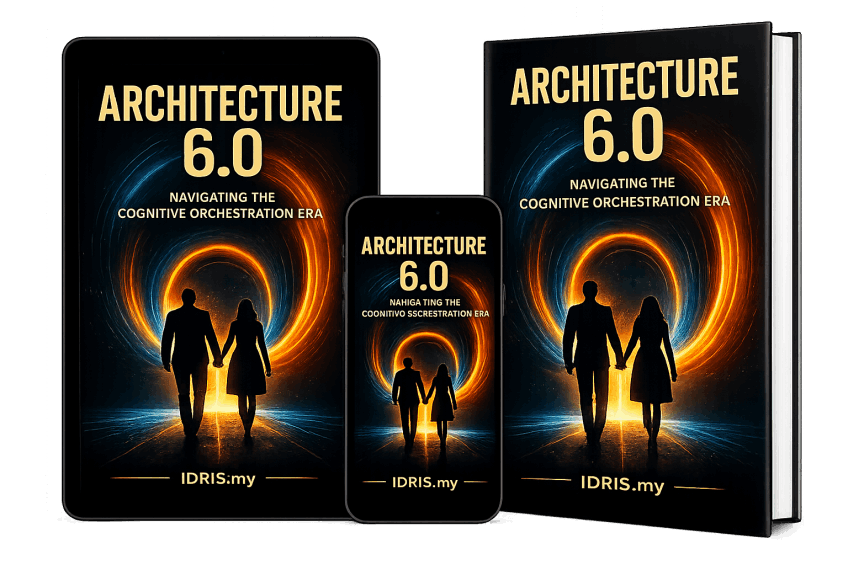
A reflective continuation of The Algorithm of Architecture, this evolving work explores how architecture is entering a new civilisational condition shaped by AI, cognitive ecosystems, and accelerating human-machine collaboration.
Moving beyond the age of isolated drafting and digital production, Architecture 6.0 examines the architect’s transition from designer of buildings… towards orchestrator of intelligence, meaning, ethics, memory, and human reflection.
Architecture 6.0 is not merely about technology. It is about civilisation. Not just smarter buildings, but wiser architects. Not merely faster systems, but deeper reflection.
Blending professional experience, architectural pedagogy, and emerging AI ecosystems such as ARCH[@i]TECH and CTA (Cognitive Triangulation Architecture), this work questions not only how we design… but how we think, deliberate, and remain human within an age of intelligent acceleration.
From studio to society.
From automation to orchestration.
From ambition to legacy.
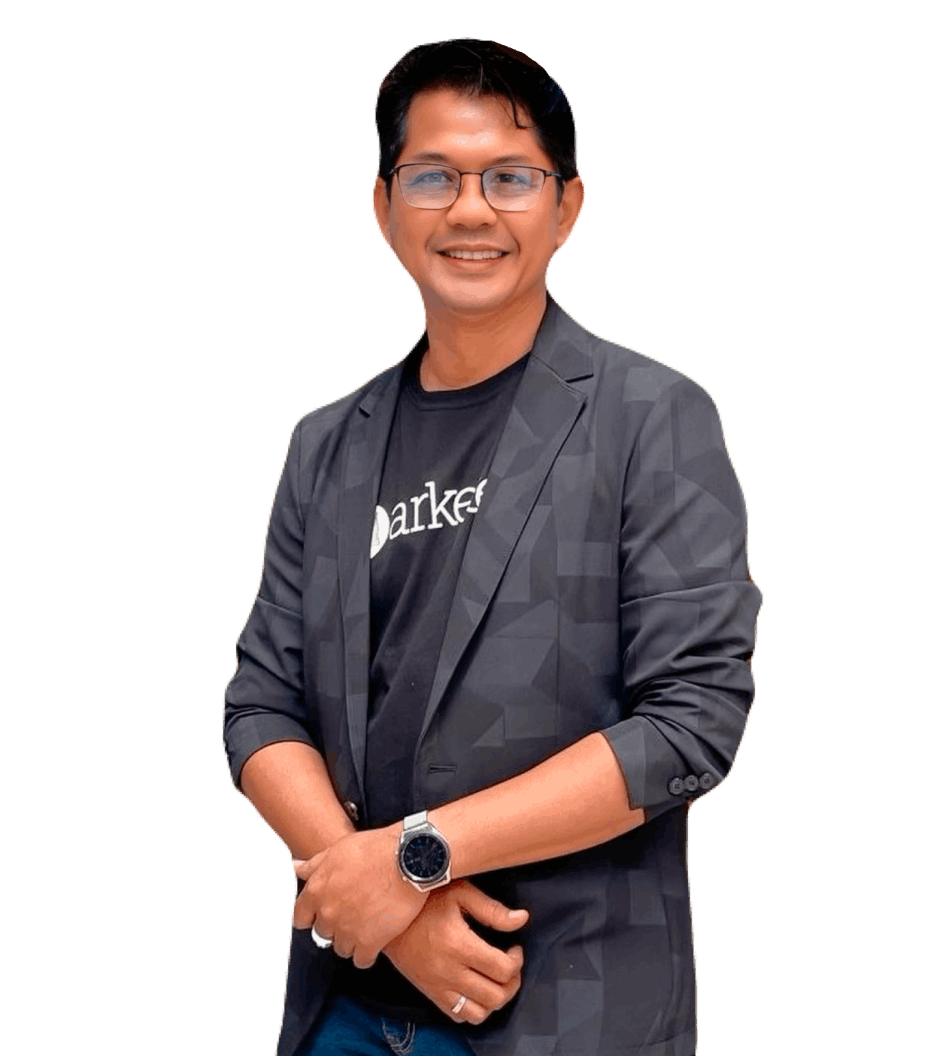
Drawing from his expertise in sustainable design, urban heritage, knowledge management, and info-tech, he views life as a carefully constructed framework where every decision, like every building block, contributes to the greater whole.
With experiences in diverse organizations and as an active member of several professional bodies, Idris integrates practical industry knowledge with academic insights. His philosophy reflects a commitment to creating environments that are not only functional but also harmonious, resilient, and sustainable—on both a global and personal level.